
West Seattle, Washington
25 Friday
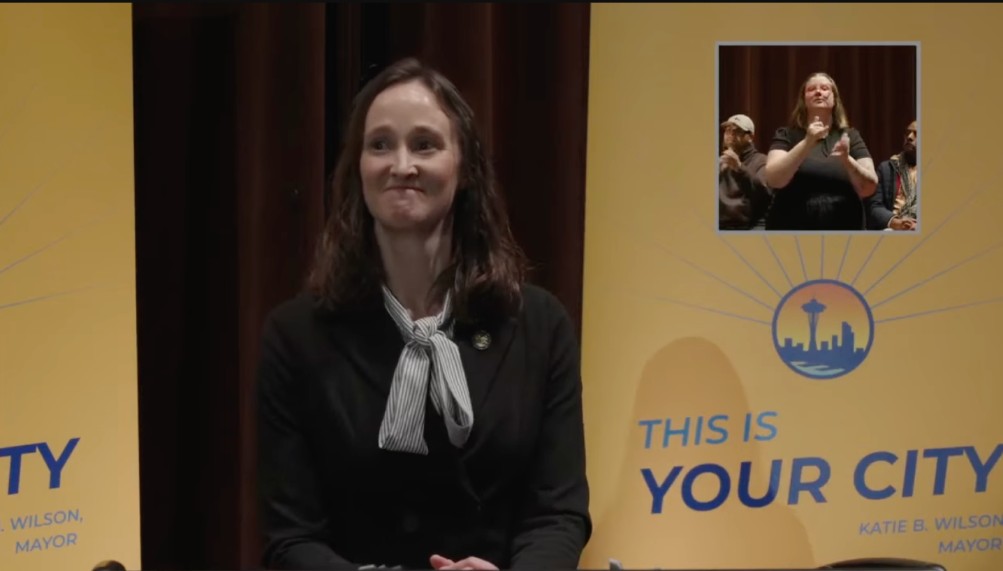
1:42 PM: Mayor Katie Wilson just wrapped up her first budget address, presented at the main library downtown, as she went public with a $9.1 billion proposed budget. Key points included that she said she’s “righting the ship,” presenting a budget with “no general fund deficit” through 2030, also promising “effective government” and “growing a resilient economy.” She said she’ll do that with “no new major sources of progressive revenue,” aka taxes. And she said she’s “fully funding” the current Seattle Police hiring plan, budgeting for 66 more police officers next year than this year. Her public-safety points included the only West Seattle-specific mention of the speech (which was light on geographic references otherwise), permanent funding for a teen late-night program in High Point that’s been operating as a pilot. Regarding transportation, while she said the levy-funded programs would proceed as planned, some maintenance projects (not identified in the speech) will “face delays.” Regarding city jobs overall – in a speech she opened by expressing gratitude for city workers – she said 128 jobs would be cut, mostly vacant, but 15 currently employed people would lose their jobs. Individual departments are starting to send out their summaries of what the budget means to them, so we’ll be updating this story with more details as the afternoon goes on. For starters, here’s the summary from the mayor’s office. Budget documents from her proposal are linked here.
4:37 PM: From the budget summary document, here’s more elaboration on public-safety spending:
• The Seattle Police Department’s (SPD) 2027 Proposed Budget includes $556 million to support public safety. Compared to the 2026 Adopted Budget, this increases SPD’s budget by $68 million (13.9%) annually to fund 1,250 officers in both 2027 and 2028, 66 more than were funded in the 2026 Adopted Budget. This net growth includes a reduction of $9.5 million, including eliminating funding for 28 civilian positions (four of which are filled), and reducing funding in SPD’s marketing and recruitment budget to help address the structural budget deficit.
• The Seattle Fire Department’s (SFD) 2027 Proposed Budget includes $346 million to maintain core fire and emergency response services, reflecting the City’s budget constraints, with a $7.1 million reduction to its overtime budget. The budget also increases ongoing funding for maintenance and utilities to better reflect actual expenditure trends and adds 5.0 FTE Firefighter to staff peak-time aid car. In addition, the proposed budget adds $8.7 million over the biennium in the Department of Finance and Administrative Services’ (FAS) budget to increase funds for renovations to Fire Station 25.
• The Community Assisted Response &Engagement (CARE) Department’s proposed budget of $72.6 million sustains operations of the 9-1-1 Dispatch Center and Community Crisis Responders working 6:30am-1:00am in most areas of the city. The proposed budget also supports the Mayor’s Gun Violence Plan (MGVP) with funding transferred from HSD to CARE. These investments will support immediate actions to address gun violence including designating CARE as the city’s command center for gun violence reduction strategies, aligning community-based violence services with 911 emergency response, network coordination for Seattle’s Community-led Safety Network, launching Violence Reduction Councils to review homicides, and a new partnership with the University of Washington for data-driven assessment and evaluation.
In addition, the CARE’s 2027 proposed budget includes an increase of $1.6 million of ongoing funding for the CoLEAD program, the ongoing lease and operations of a housing site, which provides dedicated housing capacity for CoLEAD participants and specialized populations with behavioral health and substance abuse issues. The investment preserves continuity of services and is a key component of the City’s alternative response and public safety strategy.
And more details on the aforementioned High Point program:
$300,000 to sustain a Teen Late Night pilot at High Point Community Center, the ninth community center or Teen Life Center with Teen Late Night programming citywide. This free program, run by Seattle Parks and Recreation in partnership with Seattle Police Department, creates a supportive environment most Friday and Saturday nights for youth ages 13-19 by having trained adults provide educational services, intercultural activities, athletics, free pool time for certain locations, and career readiness opportunities …
LOCAL NOTES: First one we’ve found in the fine print is in the Parks budget doc:
$700,000 to complete planning and design work for Camp Long Lodge rebuild, which was significantly damaged in November 20(2)4 and has been stabilized using insurance proceeds. The department will continue to explore funding options for the unfunded construction work including grants and future Park District capital funding.
Checking SDOT specifics next, no West Seattle projects called out. Still checking other major departments’ specifics.
By Tracy Record
West Seattle Blog editor
 “ICE activity is HERE in West Seattle,” was the statement projected onto a screen as West Seattle Indivisible opened its September meeting.
Photos like these, from Saturday, half a mile from WS Indivisible’s meeting site at St. John the Baptist Episcopal Church, had underscored that declaration. But the group’s meeting focus, community response to the immigration-enforcement crackdown, had been planned weeks if not months earlier.
WSI co-director Laurie Reinhardt opened the discussion with a recap of Saturday’s streetcorner demonstration in memory of 76 people whose deaths were linked to ICE operations, with memorial signs held by people dressed in black, standing at more than a dozen streetcorners along California SW between Morgan Junction and Admiral Junction. The signs were handmade by a WSI member, “emotionally grueling” work, as Reinhardt said, before segueing to a video showing some of the signs and signholders, set to somber music.
The first speaker was Natalia Vasileva of WSI’s immigration-focused team, presenting data she said had been collected by advocacy groups making disclosure requests – first showing a bar grant immigrant apprehensions per month in our state since 2022, increasing dramatically in recent months – almost 700 in June and July. Of those, she said, 120 of those 700 had convictions, but only three were felons, she said. For the first half of 2026, most people taken into custody spent “one week to two months” in detention.
Another bar chart showed Mexico as the home country for the vast majority of detainees, and almost all the others were Latin Americans; the rest of the top five countries from which detainees had come were Guatemala, Honduras, Venezuela, and Colombia.
She said 300 children under 18 were taken into immigration custody in this state so far this year, adding that, around the country, 1900 children are currently in immigration custody. She said that volunteer lawyers are being sought by the Children’s Due Process Project to help petition for juveniles’ release.
WSI member Dianne talked about working with an immigrant and his partner, who were going through the system. He was an entrepreneur in his own country, went to school for a master’s degree, got a job here, bought a house, He ‘went to all his check-ins” and then was arrested and put into detention in mid-July because of an “erroneous domestic-violence charge.” They found a pro-bono lawyer who wasn’t available immediately so supporters and co-workers raised money to get him help sooner. But he remained detained. A judge finally found that his rights had been violated because he was detained at a check-in without warning, and he was released August 24. Then another man her group had been working with was detained this week; he is fighting Stage 4 cancer. A doctor at the detention center advised against detaining him further – so he’s home.
Next, a panel discussion moderated by veteran immigration lawyer Jay Stansell, with local people who work with groups including the Alaska Junction Community Defense Network, National Day Laborers Organizing Network, Adopt-a-Corner, and Kids in Need of Defense. Because of the work they do, most of the panel participants went by pseudonyms, and photography was not allowed.
KIND was explained as a nonprofit that “strives to protect the rights of unaccompanied immigrant children” so that “no kid has to appear in court by themselves.”
The NDLON volunteer explained that they stand in solidarity with people looking for work who are “vulnerable because of what’s going on right now.” They are there to make connections, not just show up for a while and leave. They hope they can be a deterrent “if ICE were to show up.” They want to make what they do more “accessible” and say that “anyone can do this – I’m just a regular person with no special skills,” not even another language.
The Community Defense Network volunteer said she’s involved in “patrol and rapid response.” For the former, people do it in a variety of ways, where there might be vulnerable people or an event. It can be “tailored to exactly what you want to do or feel comfortable doing.” They look for “suspicious” cars – heavily tinted windows, for example. Rapid response is what happens when someone’s been taken away – a call will go out (via Signal, these groups’ primary commuication channel) – usually the person has been taken away before resonse volunteers arrive, but the person’s vehicle and personal belongings have been left behind, so volunteers work to secure those and contact their family. Another rapid-response volunteer spoke next. She talked about what happened when contractor Eduardo Esparza was taken away in July – they were within a block of it. She talked about “aftercare” including in that case comforting the woman who tried to stop it. On Saturday at 42nd/Andover, they made sure the car got back to its owner’s family. They offer long-term care for families too – maybe fundraising, grocery buying, dogwalking, offering a place to stay for a few days. She said there are currently “20 abductions in Seattle per day,” many “unseen because they’re being sneaky.” She talked about the trauma experienced by one witness who saw what happened Saturday – saw the window-smashing, tire-slashing, the targeted people’s raw terror – so they’re getting that person some help. They can use volunteers doing almost anything.
“What else can I do?” is the question Stansell said everyone can ask. “It’s important to be alarmed (but also) to take action.”
The volunteer from NDLON said they take two-hour weekly shifts and bring coffee and treats, “it’s just like hanging out with friends … we’re just hoping to be here and nothing ever happens.” But things have gotten more nerve-wracking the last few months.” Stansell noted, “Being out there, you’re winning all the time,” likely being a deterrent – “you’re saving people.”
He then asked how people can help KIND. Its rep said that ICE is detaining juveniles when they’re not supposed to. Their cases are being sped up to a rate that even lawyers can’t keep up with. There are hearings at which 50 to 60 children are churned through the system in a day, “It’s ridiculous,” but her organization at least tries to provide information. Fundraising, pro-bono lawyers, those are things KIND is looking for (it has offices all over the country).
What’s the most important thing to do if you see an ICE abduction? Contact someone you know who is in rapid response. Better yet, the volunteer said, sign up for their group – and then you can text if you see something. She joined so she would “know what to do.” Her group literally started as a few neighbors and has done a lot of good work – she related helping a family who chose to “self-deport,” and needed suitcases – she said they put out a call and “five suitcases were on my porch” soon. If you volunteer, yes, you’re going to see negative things, but you’re also going to see positive things that “will overwhelm you,” in a good way. They also have training for just about everything people can help with, and if they don’t, “we’ll create the training together.”
Stansell said it’s people’s constitutional right to “be in their community, to witness what’s going on.” He added, “If you’re neighborly with your neighbors, you’ll know what’s needed.”
In subsequent discussion, the Rapid Response volunteer noted, “There’s no one right way to do rapid response.” Stansell said there is one important constant, though: “The Trump Administration considers us all people who are trying to violently overthrow the government” but they stress nonviolent action “so we can never be accused of being violent, because we’re not.”
They then heard from a nearby resident who was in the area of Saturday’s ICE operation and told a nearby construction crew about it – after which, she said, “they left and weren’t there today.” She also promoted the Southwest Family Fund, which is having an upcoming fundraiser at Southgate Roller Rink. The rapid-response volunteer said that “100 percent of the fund goes to people here who are impacted by ICE.”
WSI offers Constitutional Observer Training every week, Reinhardt reminded everyone (the WSI website has the info).
The group then broke into small groups so people could talk individually with the panelists. They do all their work on Signal- “security is key” – if you want to be referred to someone but weren’t at the meeting, contact WSI, which can put you in contact. And “tell people” about getting involved, one of the volunteers urged. (Ask your neighbors – maybe one of them is already involved.” (They have a hotline but don’t distribute it widely.)
ANNOUNCEMENTS:
-Get Out the Vote online event with the 34th District Democrats on Wednesday (September 23)
-No Kings: Vote Early event on October 17, focusing on a planned downtown demonstration
-Signmaking party in lieu of October 18 meeting
-Ballot-box march from here to Junction drop box on October 25 – “I would love to see a thousand people!” said Reinhardt. 1:30-3:30 pm, joyful with drumming etc., “Bop to the Box.”
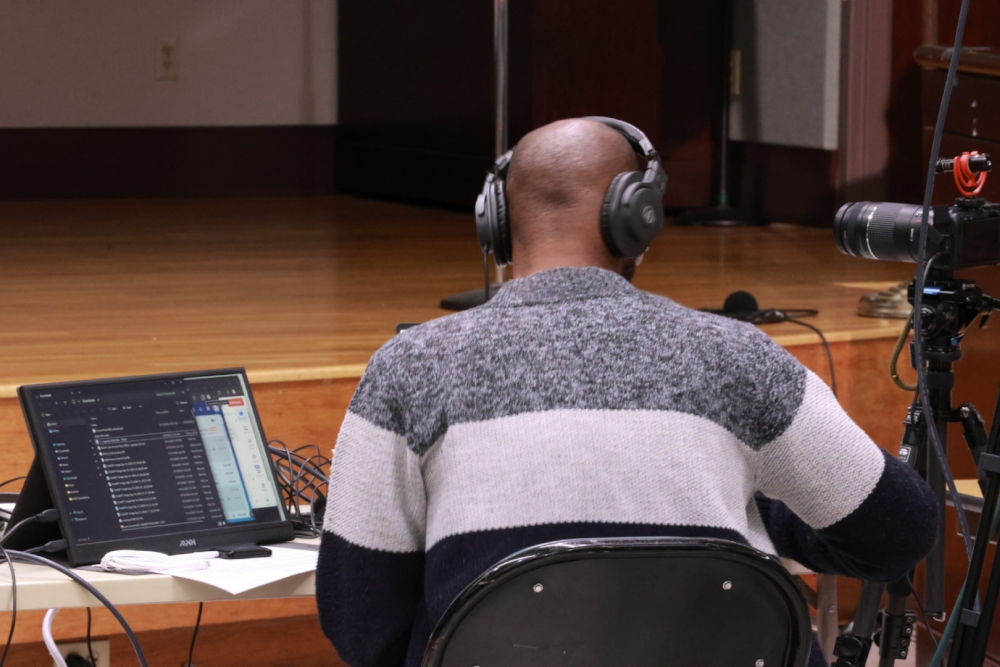
Producing a ~25-hour event for an in-person and online audience can be a challenge, so this year’s “Bend It Like Booker“ got off to a later-than-planned start this morning, but we arrived in time for organizer Rachel Glass‘s welcome:
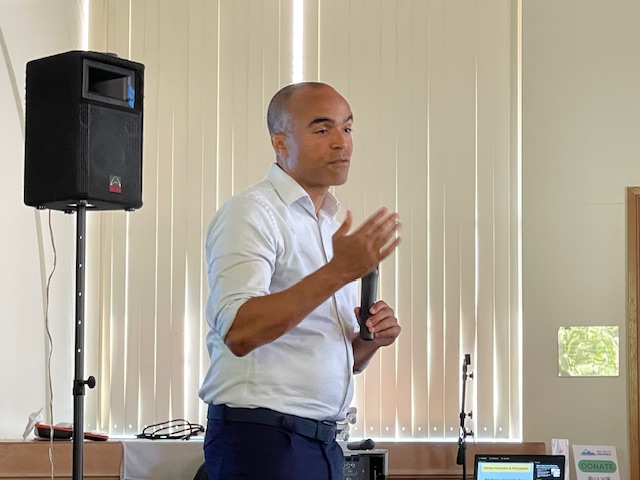
We stayed for an hour-plus to hear the first two speakers – King County Elections Director Julie Wise aimed to deliver a reassuring sheaf of information about the upcoming election including how ballots are processed and protected
She reiterated what we’ve heard other election officials stress this season – as soon as you get your ballot (they go out October 14), vote and turn it in – preferably at a ballot box (they open October 15), but if you must use the USPS, no later than a week before Election Day (November 3).
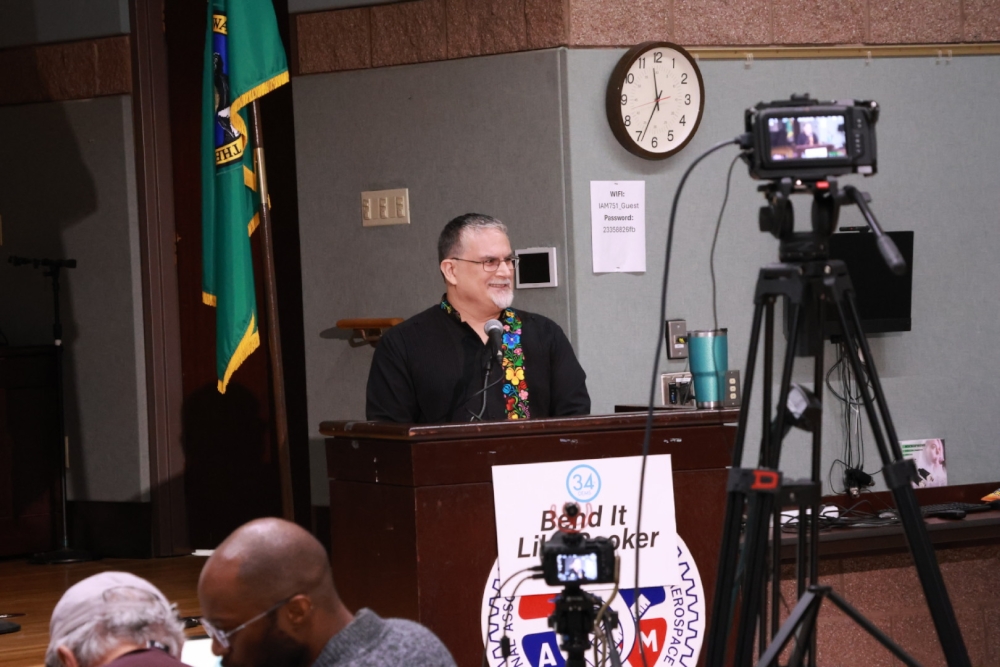
Second speaker was White Center lawyer Vicente Omar Barraza, whose topic was “Welfare Cheese Makes America Great.” Barraza described himself as son of a drug dealer and alcoholic, and beneficiary of govenment assistance that should not be begrudged to those who need it, particularly in light of the rich people who are benefiting from government generosity far more amply:
“Bend It Like Booker” will continue with nonstop speakers, performers, and presenters until 11 am Sunday at the Machinists Union Hall in South Park (9125 15th Place S.) and online.
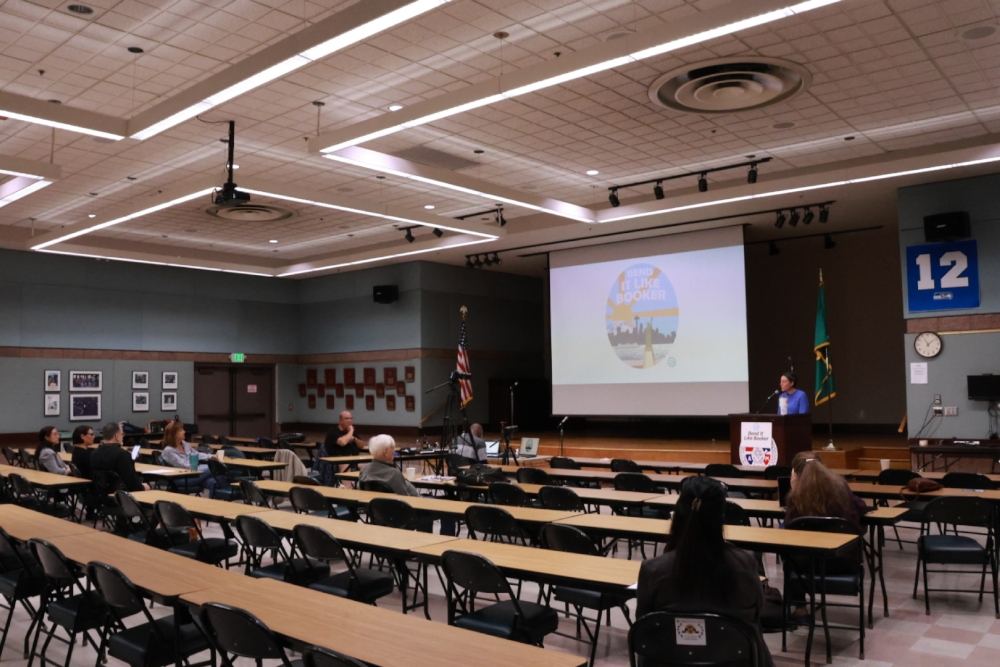
see our preview for the organizer’s recommendations about highlights in the hours ahead, though she says any time will be a good time to tune in/show up. Get your ticket – online and/or in-person – here.
By Tracy Record
West Seattle Blog editor
If elections aren’t protected, nothing else really matters.
That’s the essence of what state Attorney General Nick Brown told more than 140 people at Sunday’s monthly meeting of West Seattle Indivisible at St. John the Baptist Episcopal Church in Admiral.
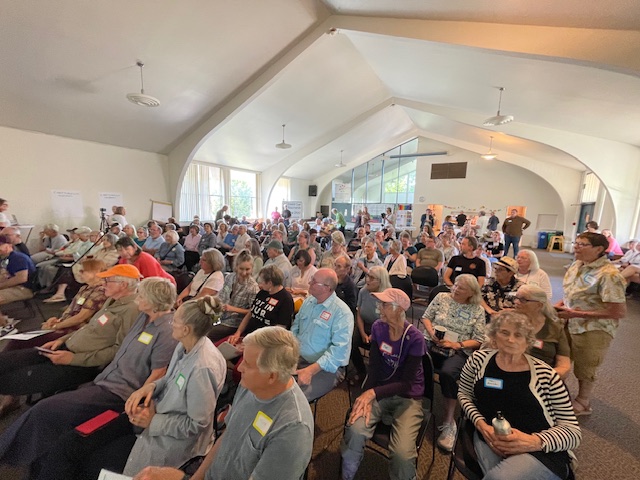
Brown – “a proud West Seattleite” – was the first of three guests invited to discuss “all things election,” as WSI leaders Laurie Reinhardt and Amy Daly-Donovan described the theme, but he had a lot more to say. We recorded it all on video, including his replies to attendees’ questions:
As demanding and intense as the AG job is, Brown insisted it’s “so much damn fun!” The AG is not only “the state’s lawyer” but also constitutionally charged with advocating for the people of Washington, he explained. That’s led to a variety of actions to protect consumers and the environment, among other things, and it’s in no small part why, he said, “Every now and then I get to sue the President of the United States.”
70 times, to be specific, Brown said, adding, “I do not relish suing the president … (nor relish that a major part of his job) is protecting people from the president.” Among other results of those lawsuits, he said, the state has kept the federal government from taking away “15 billion dollars in all sorts of funding,” from cancer research to public-school funding that he said was targeted “because we have the audacity to provide (diversity/equity/inclusion) programs” that the administration opposes. He also accused the administration of “hypocrisy” by trying to cut crime-victim funding allocated by a proram “signed by President Ronald Reagan.”
Then to the topic of the day: Brown said he has been active in election protection with other states’ attorneys general and that various possible scenarios are being planned for, even things that were once unimaginable, like armed federal agents showing up at polling places. “The federal government is the biggest threat to the safety of your elections … they want you to be scared, they want your neighbors to be scared … because when more people come out and vote, they lose.”
He didn’t discuss specifics of what’s being planned in response to such “scenarios,” but in open-microphone Q&A, one attendee asked what would be done if indeed “armed federal agents” showed up. It’s illegal, Brown clarified, “and we would be in court immediately.” Could lawbreaking agents be arrested by local police? They could, “but I wouldn’t advise it,” he replied.
Another question involved federal agents breaking the law now – with an attendee asking about the masked ICE officers disregarding our state’s new law against masked law enforcement. “We are running aaainst strong headwinds … a similar law was thrown out in New York” recently (here’s an early-August report).
Other questions included issues related to the immigration crackdown – which Indivisible leaders noted would be next month’s spotlight topic – such as whether the state could take action to end the use of restraints on ICE detainees flown out of Boeing Field. “States have limited authority to dictate how the federal government operates” in situations like this, Brown said, though he wants to hear about “civil-rights violations” “ICE can operate but they can’t violate your civil rights.” A later question involved the recent reports that “shock gloves” were being procured for ICE officers; “if we see them, we’ll evaluate” what to do, Brown said.
He also was asked about “getting money out of politics” – our state has some “good transparency laws,” he replied, and “fairly (stringent) donor limits.”
Other questions brought the discussion back to the upcoming election – with Brown reiterating that the idea of the Trump Administration “attacking” the election process “is not hypothetical any more … Twice he’s tried to change how we count votes. Every state that has said ‘no’ (to such changes) and has been sued (by the federal government) has won … the administration has lost 20 cases.” The best thing voters can do, he added, is fill out the ballot and get it into a drop box – not the US Mail – as soon as you get it (mid-October for the November general election); don’t procrastinate.
That was also stressed when specifics about King County Elections operations and plans emerged in a presentation by chief of staff Kendall Hodson – here’s our video, including the Q&A that followed:
KC Elections has about 80 permanent staffers but will soon be hiring hundreds of temporary workers for the general election. They’re predicting a 75 percent turnout, similar to 2018, which would be double the primary turnout. She too stressed voting sooner rather than later, and offered an added benefit – the earlier ballots are in, the higher percentage of votes they’ll be able to report on election night. In 2020, Hodson said, 90 percent of the results were available on Election Night because so many had been turned in early. She said they hope to have 100 drop boxes in place (update, a KCE spokesperson we checked with today confirms they hope to add 9 countywide but aren’t ready to say where). Also, she advised, sign up for the ballot-tracking service that will notify you when yours is received/verified/counted. Something else you ca do right now – be sure your voter registration is up to date.
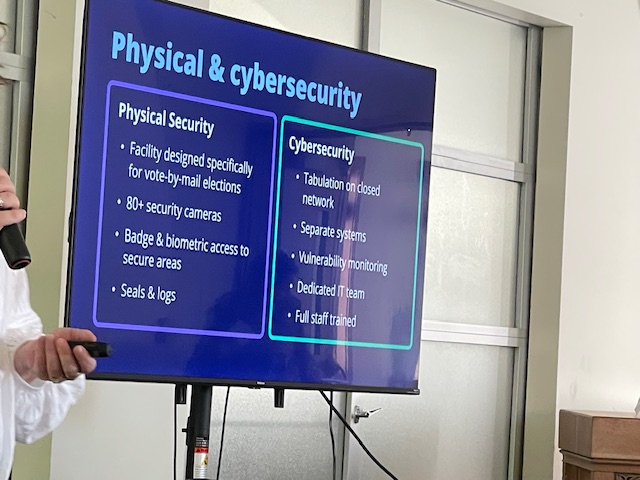
Hodson explained why mail-in voting is “accurate and secure,” detailing the auditing and observation measures in place, both in person and via 80 security cameras, as well as access that is limited to workers that have to have both badges and authorized fingerprints.
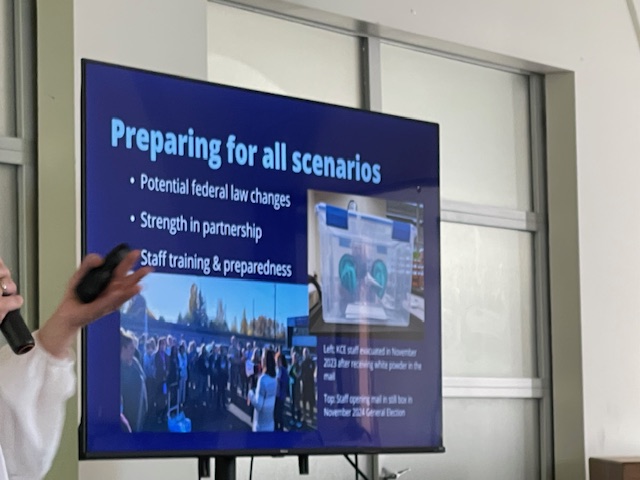
Along the lines of what Attorney General Brown had mentioned, KC Elections is also “preparing for all scenarios,” with staff training and “incident-response practice,” going through scenarios such as “what if a federal agent is standing in front of (a drop box) – how would they reach the Attorney General’s office as quickly as possible?”
Ballot security was the first question asked in Hodson’s Q&A period. She explained the steps a ballot goes through – it’s scanned, the signature is photographed and verified – even before the ballot envelope is opened – and it goes to the tabulation system. All that takes a lot of people-power, and that led to an extended pitch for those temporary jobs we mentioned earlier – KCE’s voter-services manager Kenny Austin, a West Seattleite, said they’re “good-paying union jobs” and you can register on the county’s jobs site to be notified when they’re posted.
Also speaking to West Seattle Indivisible, executive director Charles Douglas of Common Power, which leads trips to knock on doors in other states and cities, explaining that his organization was started in 2018 ‘by concerned citizens tired of not having an impact on federal elections.” Here’s our video of how he and staffer Binh Truong explained their work:
They urged Indivisible members to join them – on one doorknocking trip or many: “Any Senate or House race worth anything, we’ll be there,” and some other races of outsized importance too; specific candidates they’re supporting this fall include Texas U.S. Senate hopeful James Talarico and Georgia U.S. Senator Jon Ossoff. It’s up to volunteers to cover their travel costs, but for those who truly can’t, Douglas said, help might be available, such as matching funds and donated airline miles. The group so far is planning 30 trips “across 13 states.”
Before the two-hour meeting concluded, the group also heard a slew of announcements, including an exhortation to register people to vote – WSI’s Randy Winn pointed out the millions of people who didn’t vote, registered or not, in major recent elections, outnumbering those who did – and pitches for postcarding, including a commitment to fill out and send at least 5,000 postcards urging “no” votes on November’s three state ballot initiatives. Dates for those events and many more, including recurring demonstrations and trainings, are on the WS Indivisible website here. That’s also where to find info about their next general meeting, 3:30 pm Sunday, September 20.
Would creating a permit program for RV dwellers – with policies and rules to follow to get/keep one – help reduce their prevalence on Seattle streets and get them into shelter/housing? That’s at the heart of a proposal that will be presented to the City Council Public Safety Committee tomorrow (9:30 am Tuesday, August 11). It’s titled the Vehicle Resident Assistance Program. It would have six components – a major one deals with parking rules, and what a special permit would enable eligible RV residents to do:
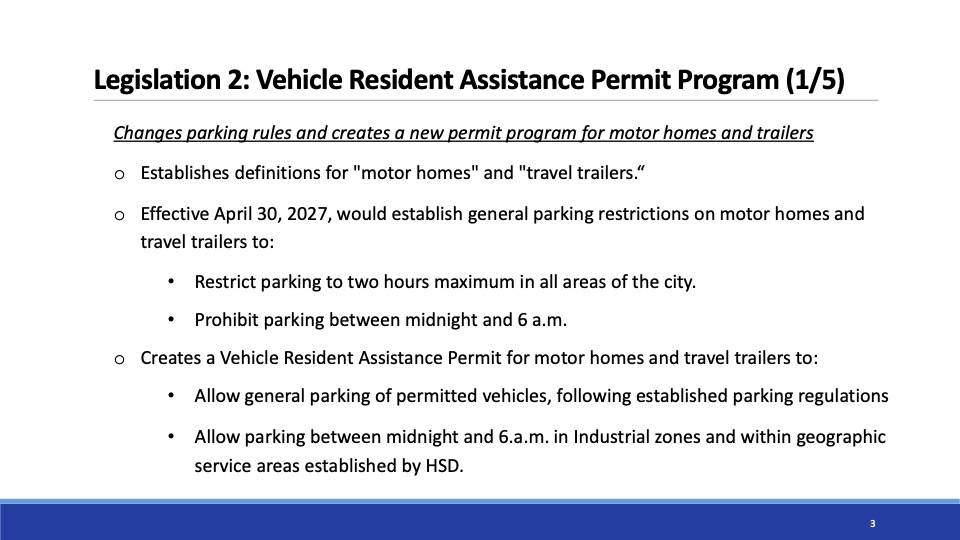
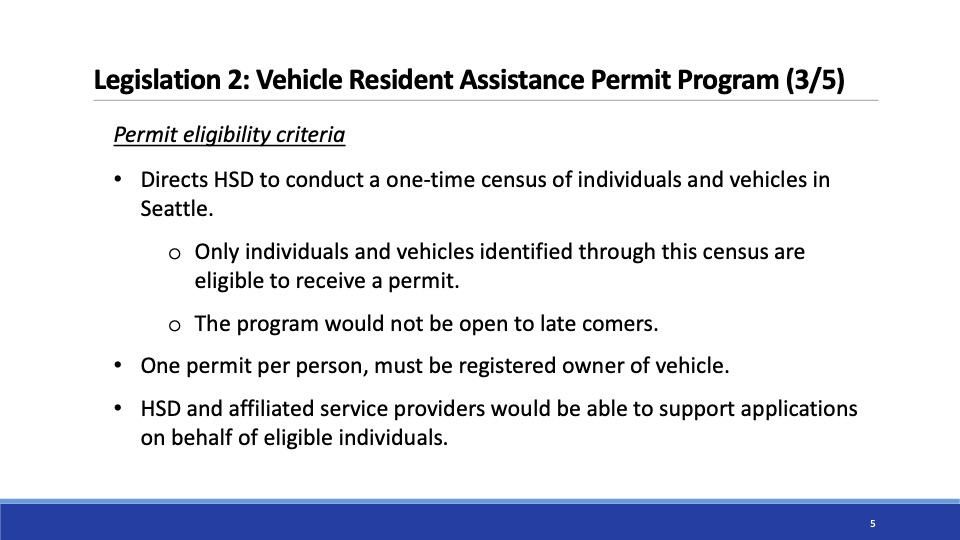
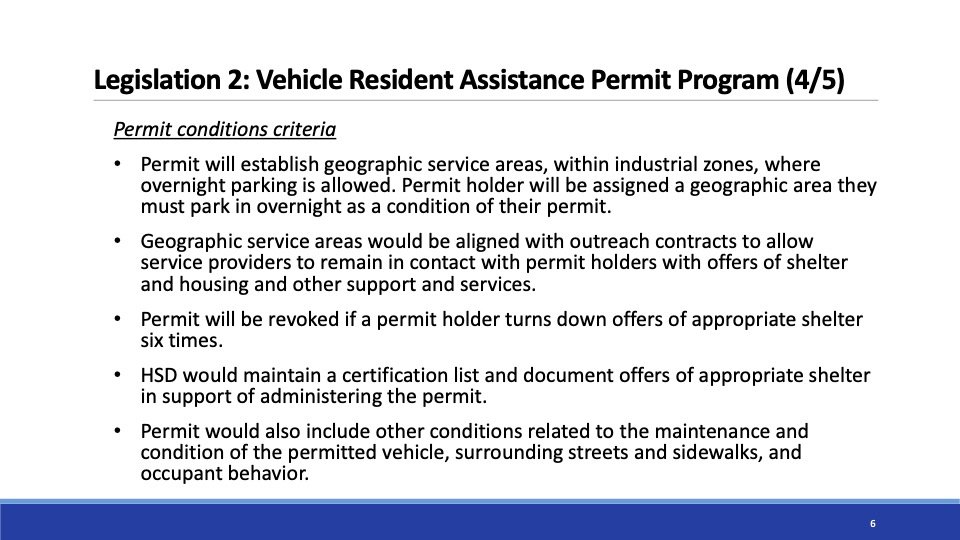
The proposal is from northwest Seattle Councilmember Dan Strauss, who focused on the “pathway to housing” aspects of the package in this announcement.If you’re wondering who would enforce the rules:
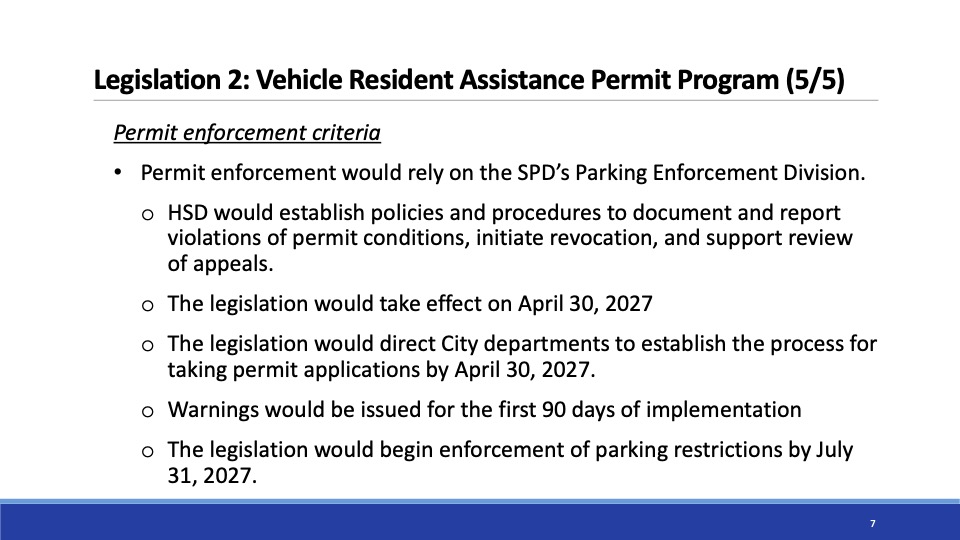
See the full slide deck for tomorrow’s meeting here. This won’t be voted on – it’s just a briefing/discussion; the committee might vote next month. Tomorrow’s agenda, meantime, explains how to watch and/or comment; it also includes links to the draft legislation that would comprise this package of proposals.
Tomorrow morning, a City Council committee gets the first look at a new proposal from Mayor Katie Wilson and citywide Councilmembers Alexis Mercedes Rinck and Dionne Foster, seeking to ban grocery pricing by algorithm. See the draft legislation here. From the slide deck prepared for the council meeting, an explanation:
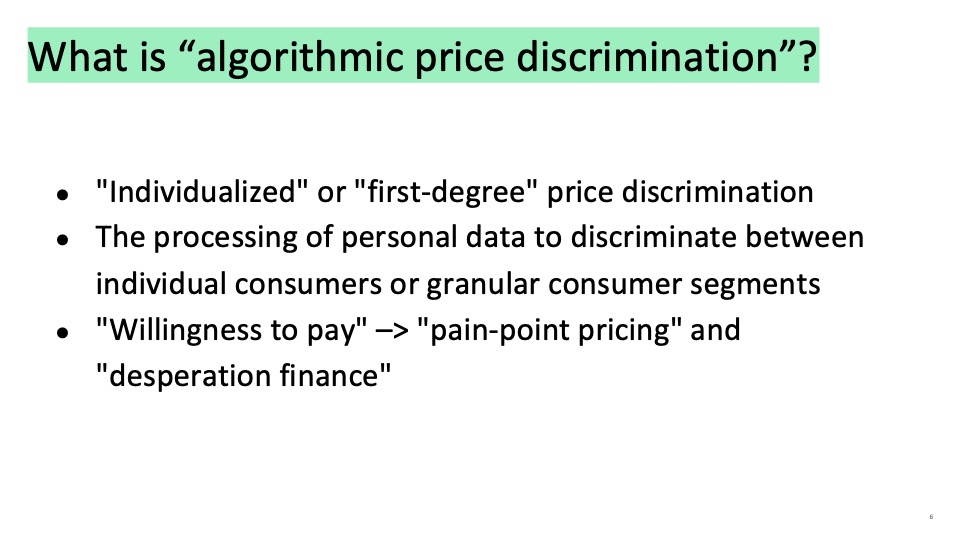
Here’s what they say is the problem:

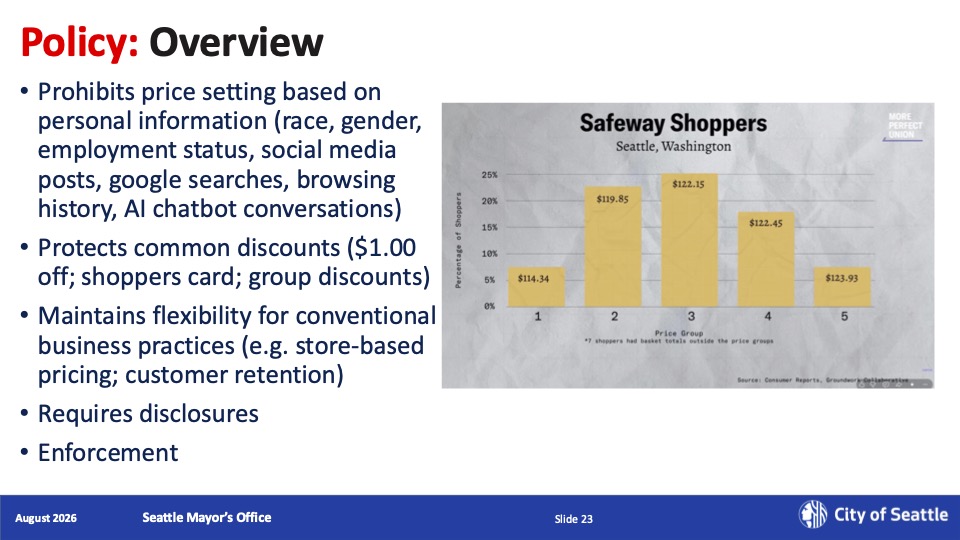
Here’s what they’re looking to do:
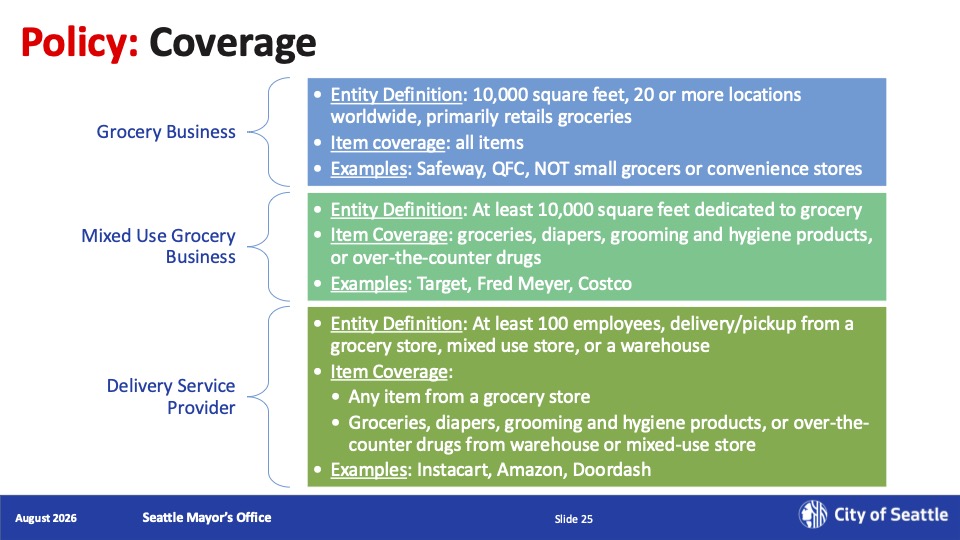
The proposal would only cover large stores and chains:
A news release just sent by the city elaborates, in part:
The Fair and Transparent Pricing policy will bar large online and brick-and-mortar grocery retailers from using sensitive personal information such as employment status, race, gender, social media posts, browsing history, chatbot conversations, or other similar data to set different prices for different customers.
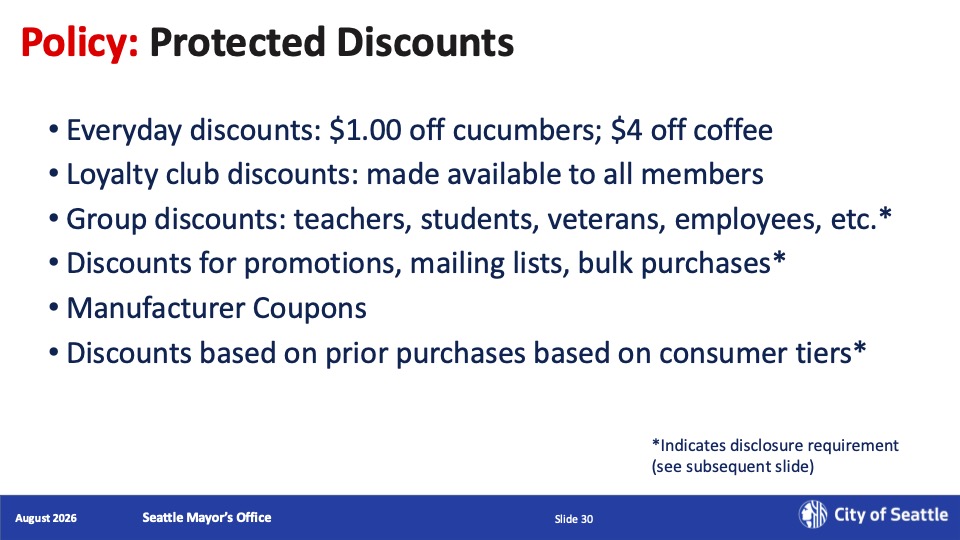
Prices must be clearly posted and publicly available. Conventional coupons and discounts for seniors, veterans, and other similar groups are protected, as are other types of open and transparent discounts which were identified through conversations with advocates and local grocery business owners.
The policy was inspired by a growing body of evidence that shows personal information is used to price-max customers by squeezing prices as high as they’re willing to pay.
Here’s more on discounts that would be allowed:
And these types of pricing practices:
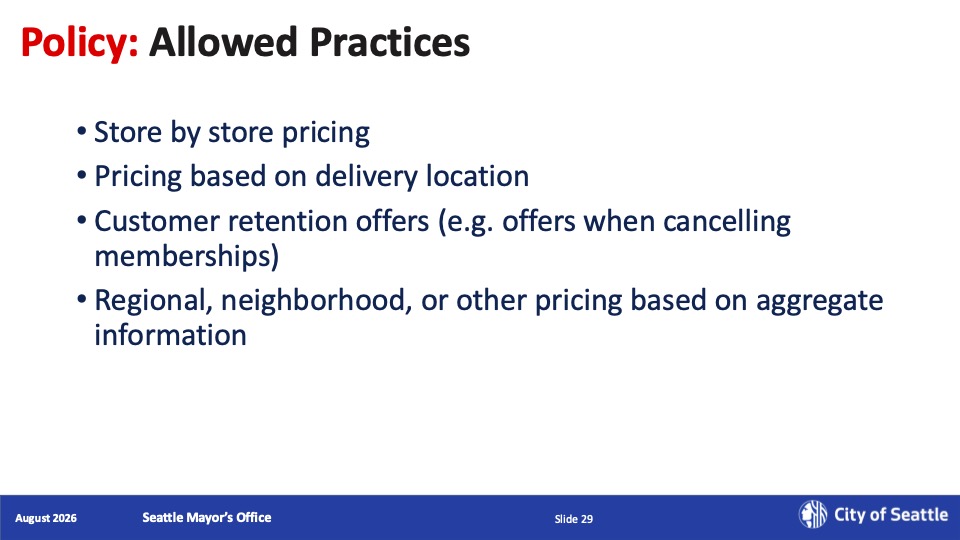
The full presentation says they’ve already been talking with industry groups as well as potential constituent groups. If this moves ahead, here’s the envisioned timeline:
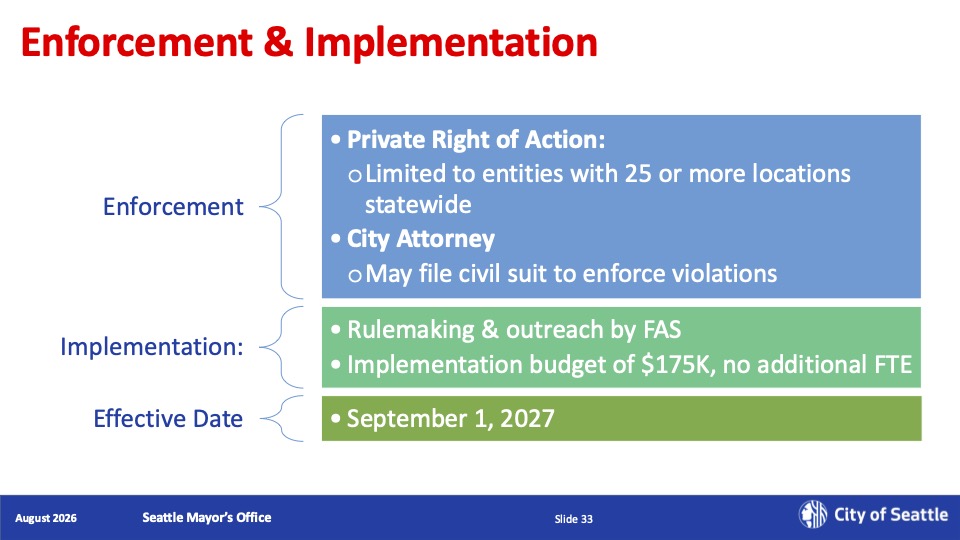
Friday morning’s discussion is in the Human Services, Labor, and Economic Development Committee (of which District 1 Councilmember Rob Saka is a member), 9:30 am – the agenda explains how to watch, attend, and/or comment. This afternoon’s news release says the committee meeting will be preceded by a rally to kick off the proposal, 8:45 am at City Hall.
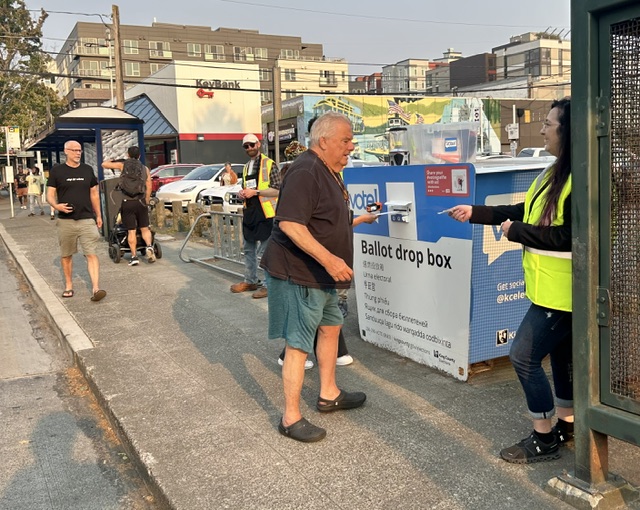 (WSB photo by Jason Grotelueschen – West Seattle Junction ballot box on Election Night)
Though the first round of election results last night didn’t leave us with any local cliffhangers, we traditionally revisit the same races when the second round comes out. So here’s where these stand after this afternoon’s batch of results:
SEATTLE PROP. 1, LIBRARY LEVY
Yes – 84879 – 72.41%
No – 32341 – 27.59%
KING COUNTY COUNCIL, DISTRICT 8
Teresa Mosqueda* – 22985 – 63.91%
Nick Duda – 9668 – 26.88%
Mia Jacobson – 3174 – 8.83%
U.S. HOUSE REP., DISTRICT 7
Pramila Jayapal* – 104661 – 83.44%
Nirav Sheth – 13261 – 10.57%
Gwen Kirkland – 4137 – 3.30%
David W. Blomstrom – 2905 – 2.32%
STATE HOUSE REP, 34TH DISTRICT, POSITION 2
Joe Fitzgibbon* – 18626 – 74.15%
Mary Anito – 6111 – 24.33%
See all King County results here. The third round will be released Friday afternoon.
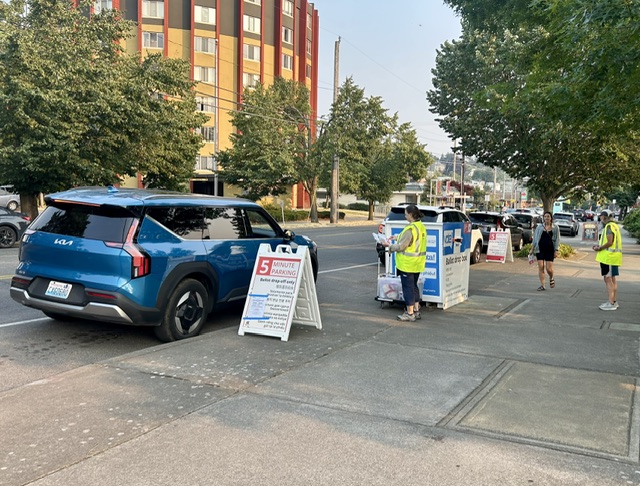
That’s one of the King County ballot drop boxes in West Seattle that we visited in the final hour-plus of voting – lots of last-minute dropoffs. Now, the first results are out – here’s the full list; we’re adding breakouts below:
SEATTLE PROP. 1, LIBRARY LEVY
Yes – 67565 – 71.71%
No – 26656 – 28.29%
KING COUNTY COUNCIL, DISTRICT 8
Teresa Mosqueda* – 17984 – 62.78%
Nick Duda – 7876 – 27.49%
Mia Jacobson – 2655 – 9.27%
U.S. HOUSE REP., DISTRICT 7
Pramila Jayapal* – 83539 – 82.98%
Nirav Sheth – 10824 – 10.75%
Gwen Kirkland – 3440 – 3.42%
David W. Blomstrom – 2446 – 2.43%
STATE HOUSE REP, 34TH DISTRICT, POSITION 2
Joe Fitzgibbon* – 14529 – 73.62%
Mary Anito – 4891 – 24.78%
The next round of results will be released tomorrow afternoon.
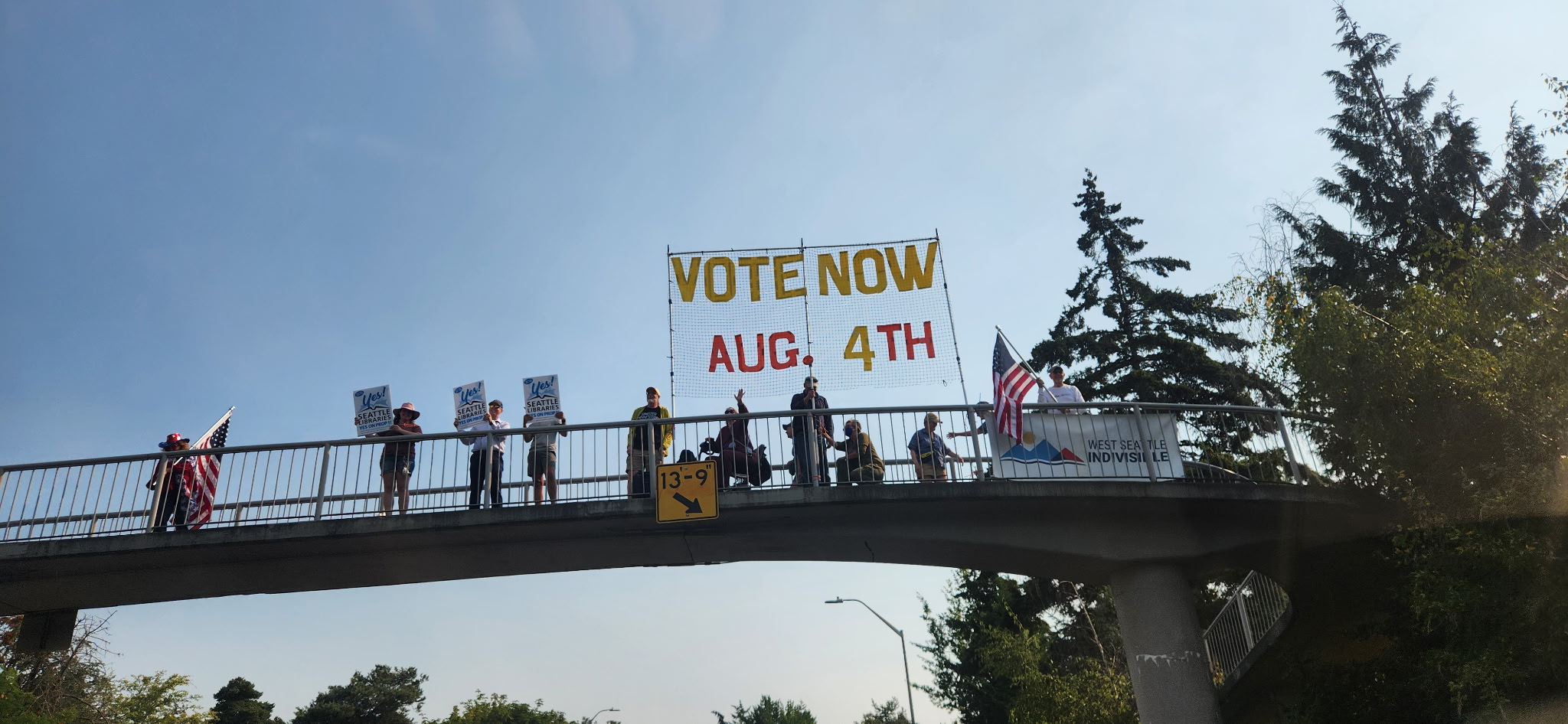
WSB team members spotted the sign-wavers on the Andover bike/foot overpass a short time ago, including West Seattle Indivisible members reminding you to vote, and Seattle Public Library levy supporters nearby. The levy is the one measure whose fate will be finalized by tomorrow’s vote; otherwise, it’s a primary election, featuring some races being narrowed down to two finalists for the November general election, including U.S. House, King County Council, and four state Supreme Court positions. After 8 pm tomorrow (Tuesday, August 4), your ballot just becomes recycling fodder, so mark it and get it into an official drop box (this map shows the four in West Seattle and the dozens elsewhere in King County) before then – so far, only 17.7 percent of Seattle ballots are in.
 This is your last weekend to vote in the August 4 election – ballots are due in drop boxes by 8 pm Tuesday (and if you plan to use USPS mail, do that ASAP to increase the chance it’ll be postmarked by Tuesday). In addition to the Seattle Public Library levy renewal/increase, there are four major races on your primary ballot – for Washington State Supreme Court. Each has at least three candidates, so the primary votes will narrow each race down to two for November. If you have no idea who to support, this might help – the nonpartisan nonprofit League of Women Voters’ Seattle-King County chapter sent word of the LWV’s short video interviews with the candidates. They’re all linked from this page. TVW also has video interviews – start here.
P.S. The West Seattle ballot drop boxes – plus ones in White Center and South Park that might be more convenient if you’re in south WS – are all mapped here. All close at 8 pm Tuesday.
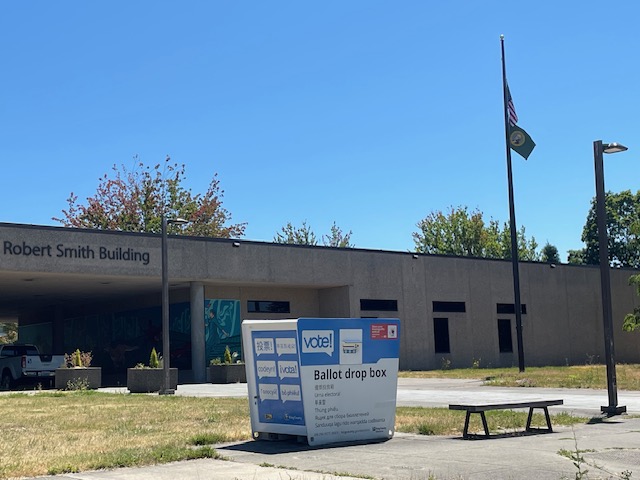
The King County ballot drop box in front of the administrative building at South Seattle College (6000 16th SW; WSB sponsor) is one of four official drop boxes in West Seattle, the best places to turn in your ballot before 8 pm next Tuesday (August 4). This is the primary election for most of the people on your ballot, with a few exceptions, including the Seattle Public Library levy, which will be settled in Tuesday’s election. Here’s info about who and what else you’ll see on your ballot.
11:53 AM: As noted in today’s event list, the City Council‘s regular weekly meeting is at 2 pm. Today’s agenda includes an expected vote on Councilmember Eddie Lin‘s proposal to limit land-use appeals that he says are delaying housing development. District 1 Councilmember Rob Saka has proposed an amendment that he says would “preserve the public’s ability to appeal certain determinations to the Seattle Hearing Examiner.” His news release this morning about his proposed Amendment B says this is what it would do:
The underlying bill will eliminate Hearing Examiner appeals for environmental determinations associated with Comprehensive Plan changes and development regulations, while retaining judicial and Growth Management Hearings Board review. The City’s analysis found 28 relevant administrative appeals over ten years; 19 were dismissed or withdrawn, while three resulted in some form of remand or reversal.
Rather than eliminating administrative (Type V) SEPA appeals entirely, Councilmember Saka’s amendment offers a more balanced alternative.
–Prioritizes housing: Requires the Hearing Examiner to prioritize appeals involving Comprehensive Plan amendments or development regulations that facilitate housing.
-Accelerates timelines: Reduces the standard timeline for resolving these appeals from 120 days to 90 days.
-Preserves independent review: Keeps independent, pre-decision review of the City’s environmental analysis.
–Safeguards public input: Maintains the public’s ability to identify legitimate deficiencies before major land use decisions become law.
If you want to comment on this or anything else before the council today, the agenda explains how to do that, either remotely or in person.
6:12 PM: In a marathon council meeting that’s not over yet, the council has just passed the bill, 5-4 (“no” votes were Hollingsworth, Juarez, Rivera, and Saka); Saka’s amendment failed, with his vote the only one in favor of it.
Seattle City Councilmembers voted today to put the renewal of the Seattle Transit Measure – doubling the current sales tax that pays for extra transit service – on this November’s ballot. Today’s vote followed a review process before an all-council committee chaired by District 1 Councilmember Rob Saka. You can read the text here. The council announcement of today’s vote summarizes what the measure will do if voters pass it:
The 2026 STM is funded by a 0.3% sales tax and is expected to generate approximately $138 million annually over the next 10 years. If passed, the new STM is anticipated to boost Seattle’s transit from approximately 180,000 bus trips per year (in the expiring measure) to 280,000 bus trips per year – a 47% expansion of service. In addition, the measure will make key investments in:
-Expanding the transit access program to provide fully subsidized transit passes for an additional 12,000 Seattle residents;
-Allocating funding to support the recommendations of the King County Regional Transit Safety Task Force;
-Providing funds for accessibility infrastructure projects that will make the transit network more equitable; and
-Prioritizing electric transit service in the Duwamish Valley and South Seattle.
The current measure, funded by a 0.15% sales tax, expires next spring.
As noted when the expansion was announced by Mayor Katie Wilson last month, it also would raise some money for the city’s support of West Seattle light rail and other in-city Sound Transit projects.
Now that the council has given its approval, the mayor has to sign it to officially finalize sending it to voters. She says she’ll do that at a City Hall event next week.
You can vote in the August 4 election as soon as tomorrow – King County Elections is mailing out ballots today.
The primary contests in which the vote will narrow down the field are for U.S. House District 7 Rep. Pramila Jayapal, who has three opponents – David Blomstrom, Gwen Kirkland, Nirav Sheth – and District 8 King County Councilmember Teresa Mosqueda, who has two, Mia Jacobson and Nick Duda. Also on the August 4 ballot, the proposed renewal/expansion of the Seattle Public Library levy. Beyond local races and issues, perhaps the most interesting aspect of the election is contested judicial positions, particularly the State Supreme Court, which has four positions up for election this year, all of which have at least three candidates running. The entire list of who’s on King County. ballots is here (where you’ll also find links to the candidates’ websites). If you’re not yet registered to vote, here’s how. County election drop boxes open tomorrow – Voting deadline for this election will be 8 pm August 4 using drop boxes (here’s the map of where to find them), or sooner if you’re using USPS mail – the ballot will have to be postmarked no later than August 4.
By Macey Wurm
Reporting for West Seattle Blog
At its next meeting, a City Council committee will continue considering a proposal targeting unwanted solicitations for homeowners to sell their property.
The Housing, Arts, and Civil Rights Committee‘s special meeting this week included discussion of an ordinance that would establish a “Do Not Solicit” list, allowing people to opt out of being contacted regarding selling their property.
The legislation was introduced by citywide Councilmember Dionne Foster as a means of stopping the “calls and incessant visits” that have been causing some longtime Seattle residents anxiety and angst. It also works to prevent homeowners from unintentionally selling their homes well under market value.
“We are seeking to protect people’s peace of mind, but also their existing wealth,” Foster said. “As well as people’s opportunity to take advantage of what they already own.”
Foster’s office has implemented a survey gathering information from Seattle residents regarding the “frequency and impact of unwanted solicitations from real estate professionals and wholesalers.” She detailed some survey participants explaining they felt “hunted” and “circled by vultures.”
In these cases, solicitation can take the form of mail, oral communication, or electronic communication. It encompasses attempting to purchase, acquire any interest, or convey residential property, according to the presentation given by analyst Jennifer Labreque.
Penalties for violation of the “Do Not Solicit” list include a $1,000 for a first violation, and $2,000 for any subsequent violation occurring within 12 months.
The list would be maintained and penalties enforced by the Seattle Office of Civil Rights. If passed, the legislation will go into effect on June 1, 2027.
Some concerns were raised by councilmembers surrounding getting the word out about the program – resulting in its underutilization. Additionally, actually being able to identify solicitors and being able to enforce the ordinance.
“We need to be just as aggressive as the people on the other side,” said Chukundi Salisbury, a panel member from Black Legacy Homeowners. The legislation would need to be reiterative – adapted to combat solicitors who would seek ways to work around the policy.
Salisbury emphasized that the work leading up to this initiative is not new, referencing his “This House is Not For Sale” campaign from 2020. He stressed that residents finally need to have the “no” mean something.
Real estate agents raised concerns during the meeting’s public-comment section, asking that the city exempt agents from the legislation. Angie Mykel wanted to emphasize the difference between licensed agents and wholesalers “making money in the margins.” Overall though, the response to the proposed ordinance was positive.
The proposal is currently planned to be on the agenda for the next Housing, Arts, and Civil Rights Committee meeting on July 8th. You can submit comments to councilmembers or sign up for public comment at the next committee meeting using this link.
Two weeks ago, we reported on information prepared for a scheduled meeting of the City Council Public Safety Committee, suggesting that SPD might have to slow its hiring because fewer officers were leaving, which posed a budget dilemma. That briefing scheduled for the committee’s June 9 meeting ultimately was postponed because it was the last item on the agenda and the previous two ran long. It’s now scheduled for tomorrow’s committee meeting (9:30 am Tuesday, June 23), same slide deck, but this time it’s the second item on the agenda, so not likely to be bumped again. It’s a regularly scheduled quarterly update, no votes scheduled nor attached proposals, but it can be viewed in the prism of the city’s looming budget shortfall. The agenda explains how to comment and/or watch, in person or remotely.
While the Seattle City Council reviews the mayor’s proposal to double the sales-tax share that buys more bus service from King County, their counterparts have just voted to approve a separate sales-tax increase to raise money for road repairs. The King County Council, meeting as the County Transportation District Supervisors, voted in favor of “a new 0.1% sales tax for King County that will raise approximately $100 million annually, with 87.5% dedicated to long-overdue investments in King County Roads,” according to the post-vote announcement. The rest would go to King County cities, Seattle included. But White Center and other unincorporated areas – in which the county is accountable for 1,500 miles of roads – will be the main beneficiaries.
Unlike the City of Seattle’s proposed sales-tax increase for transit, this county sales tax does not require voter approval. It will be collected starting January 1, 2027. Today’s yes votes included our area’s King County Councilmember Teresa Mosqueda, who said in a statement:
… Today’s action provides much needed relief for unincorporated roads, bike lanes and sidewalks to be built on the horizon. Whether a person is driving a vehicle, riding the bus, walking, rolling or biking – we all deserve to be safe and protected from undo injury or death due to failing roads infrastructure. Today’s vote keeps the majority of funding focused on investments in unincorporated areas while also investing in the transportation needs of our regional cities – creating a more connected, safe and accessible transportation infrastructure across our region. The measure also calls for the County to continue to pursue a robust Transit measure to complement this investment in roads with additional alternative modalities to driving.”
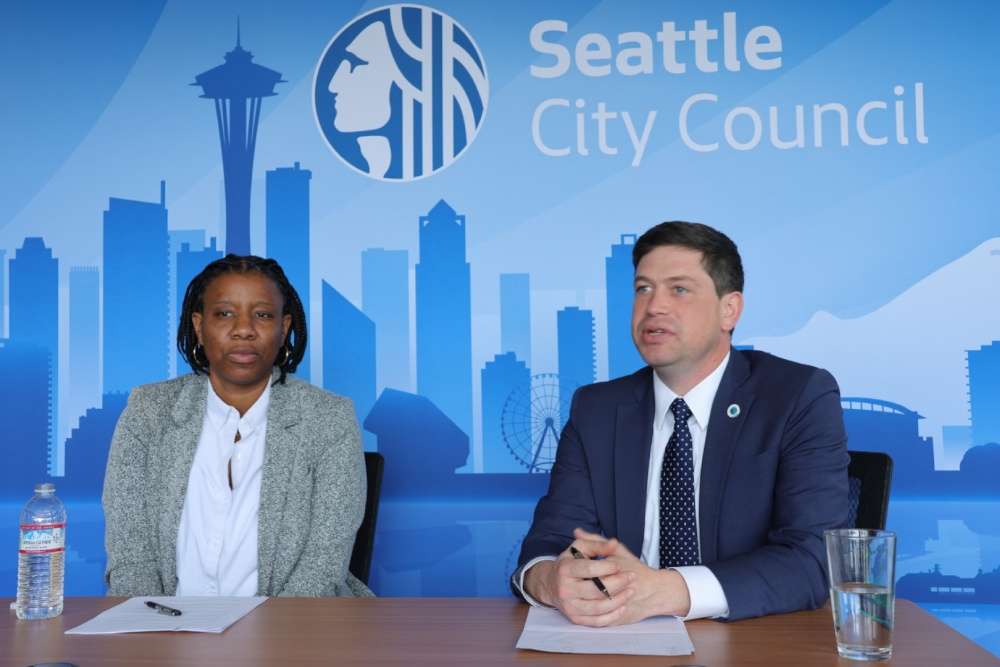 (WSB photo: Councilmember Dan Strauss with Council President Joy Hollingsworth at this morning’s Q&A)
Also in attendance at today’s informal periodic city councilmember Q&A session with reporters (earlier coverage here) was Councilmember Dan Strauss, who is the lone Seattle councilmember also on the Sound Transit Board. After the board vote a week and a half ago to approve a revised ST3 plan that does not include funding to get light rail to Ballard – which was part of what voters passed a decade ago – there were suggestions that Seattle voters who wanted more than the new plan might want to consider raising the needed money themselves. We asked Strauss his thoughts on the idea. “Inappropriate at best,” he replied, considering Seattle residents have been paying for a “Sound Transit project already promised.” He said he continues to believe that the second downtown tunnel could be dropped from the plan to clear enough funding to build all the way to Ballard. “We need to have a deeper conversation about that,” he said, adding that he considers the tunnel a regional amenity for ST, not a feature necessary to complete light rail in Seattle.
SIDE NOTE: Strauss and Council President Joy Hollingsworth also were asked about another transit-funding issue, Mayor Katie Wilson‘s proposed doubling of the sales tax that buys more Metro service for Seattle. Both said they have “concerns” about how the revenue would be apportioned.
Tonight in White Center, all three of our 34th District state legislators are scheduled to be at the North Highline Unincorporated Area Council community meeting (7 pm, NH Fire Station at 1243 SW 112th in White Center) – State Senator Emily Alvarado and state House Reps. Joe Fitzgibbon and Brianna Thomas. Exactly two months from today, all three will be on the primary election ballot – but only one has an opponent. This year’s Filing Week came and went quietly a month ago and when it was over, both Sen. Alvarado and Rep. Thomas were unopposed, while Rep. Fitzgibbon is being challenged by Mary Anito, who also identifies as a Democrat and touts her business experience. Here’s the list of others who are running for office in King County on August’s ballot. Of those who will appear on the ballot you get, with local districts that include West Seattle, U.S. House District 7 Rep. Pramila Jayapal has three opponents – David Blomstrom, Gwen Kirkland, Nirav Sheth – and District 8 King County Councilmember Teresa Mosqueda has two, Mia Jacobson and Nick Duda. The August 4 ballot also will include the proposed renewal/expansion of the Seattle Public Library levy. Beyond local races and issues, perhaps the most interesting aspect of the election is contested judicial positions, particularly the State Supreme Court, which has five positions up for election this year, all of which have at least two candidates running. Again, the entire list of who’s filed with King County Elections is here (where you’ll also find links to the candidates’ websites); if you’re not yet registered to vote, here’s how.
Through the end of this year, 0.15% of the sales tax you pay funds the voter-approved Seattle Transit Measure. That would double to 0.30% if the City Council and Seattle voters approve the renewal/expansion that Mayor Katie Wilson officially introduced this afternoon. She said it’ll make living in Seattle more affordable by enabling more people to “live car-free or car-light.” She acknowledged that raising the sales tax isn’t ideal but noted that it’s one of the few revenue-raising tools available under state law. Besides paying for more transit – 280,000 additional Metro bus trips a year, 100,000 more than the current measure funds – it also would pay for 22,000 free ORCA transit passes, more than double what the city provides now, said acting SDOT director Angela Brady during the announcement event at City Hall. The passes are now available to Seattle Promise scholars, low-income Seattle Preschool Program families, and Seattle Housing Authority residents. The measure’s renewal/expansion would also make those passes available to Housing Choice Voucher participants.
The mayor’s announcement says the Transit Measure isn’t just about buses: It also would “support the design and delivery of Sound Transit’s West Seattle Link Extension, Ballard Link Extension, and Graham Street Station.” The 0.30% sales tax would generate an estimated $138 million average per year for the 10 years of this measure, which is proposed to go to voters in November. Council review starts this Thursday and will be led by District 1 City Councilmember Rob Saka, who chairs the council committee that oversees transportation. We’ll add the specific text of the proposal when we get it; the slide deck for Thursday’s council meeting is now available, and we’ll add some highlights from that soon.
(Added: Seattle Channel video of today’s Public Safety Committee meeting, including Saka’s call)
11:48 AM: With the first FIFA World Cup match in Seattle now less than three weeks away, the city’s surveillance-camera policy is back in the spotlight. District 1 City Councilmember Rob Saka wants Mayor Katie Wilson to change her mind about what to do, and not do, with cameras in the Stadium District as the matches approach, and has sent this news release:
Today, Councilmember Rob Saka (District 1), Vice-Chair of the Public Safety Committee, called for Mayor Wilson to allow the Seattle Police Department’s Real-Time Crime Center to turn on its closed-circuit television (CCTV) cameras in the Stadium District ahead of the World Cup. Councilmember Saka’s request comes after the Mayor’s announcement on March 19 to willingly not use the installed cameras unless there was a “credible threat.” The Stadium District is in Councilmember Saka’s district.
“Security cameras play a critical role in the investigation of crimes, including unthinkable mass casualty events. I know this firsthand as a runner in the 2013 Boston Marathon. I had just crossed the finish line waiting at the family meetup location two blocks away when the planted bombs exploded,” said Councilmember Saka. “Ultimately, it was security camera footage and the technology that allowed investigators to quickly trace the attackers’ movements and catch them before they could strike again with another mass casualty event.”
“We have this same technology available in Seattle today. In May, we were able to use cameras to arrest suspects in a savage beating of a 77-year-old man downtown – suspects who could’ve gotten away and done it again. I strongly urge Mayor Wilson to turn on existing cameras in the Stadium District for the upcoming World Cup events. Activating these cameras could help deter attackers by showing that Seattle Police Department can identify them, while empowering authorities to quickly investigate if an incident occurs. With Seattle on the world stage, lives are at stake. Our city should not vacillate over some murky and confusing “credible threat” standard, which could do more harm than good even if properly implemented. Mayor Wilson must do the reasonable thing and use this existing tool with robust safeguards and privacy controls that are among the best in the entire nation,” concluded Councilmember Saka. …
Here’s our report on what the mayor said about these cameras (and others) on May 19. After receiving Councilmember Saka’s news release today, we asked the mayor’s office for her response, and will add whatever we hear back. The first Seattle match is scheduled June 15th.
Also of note, safety/security during the World Cup events in Seattle is one of the topics announced for Thursday’s Southwest Precinct Advisory Council community meeting, 5 pm (May 28) at Delridge Community Center (4501 Delridge Way SW).
5:13 PM: For the record, the mayor’s office has acknowledged our request for comment, but hasn’t yet provided the response.
9 AM WEDNESDAY: The response came in this morning via mayor’s-office spokesperson Jonah Spangenthal-Lee:
Mayor Wilson continues to consult public safety officials regarding circumstances that might warrant use of the expanded set of cameras during the FIFA World Cup. We appreciate councilmembers’ perspectives, and those will be part of ongoing discussions.
With regard to credible threats: Identifying a credible threat involves multiple experts from federal, state, and local agencies monitoring and assessing various streams of information. In collaboration with one another, they weigh incoming intelligence and jointly recommend whether to elevate security operations. Mayor Wilson’s decision whether to activate the Stadium District cameras will be informed by this group’s recommendation.
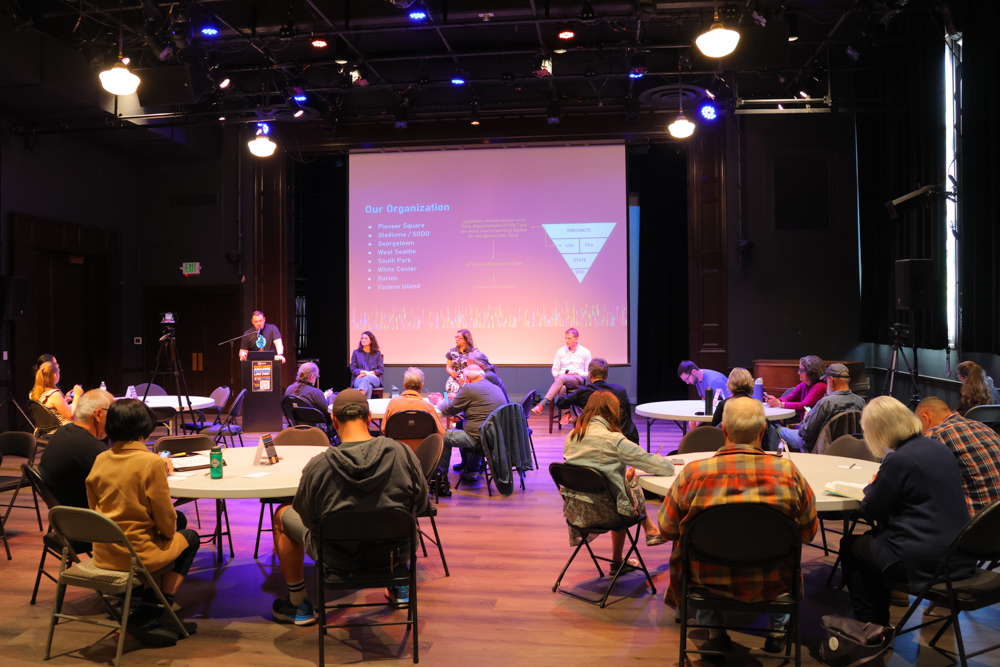
Your three state legislators spent an hour and a half answering questions Friday night in a Town Hall organized by the 34th District Democrats. Not much of a turnout, but we recorded video so you could see and hear what they were asked and how they answered.
Many of the laws for which people tend to blame local officials are actually state laws, and these are the people who have the power to change them: State Senator Emily Alvarado and State House Representatives Joe Fitzgibbon and Brianna Thomas.
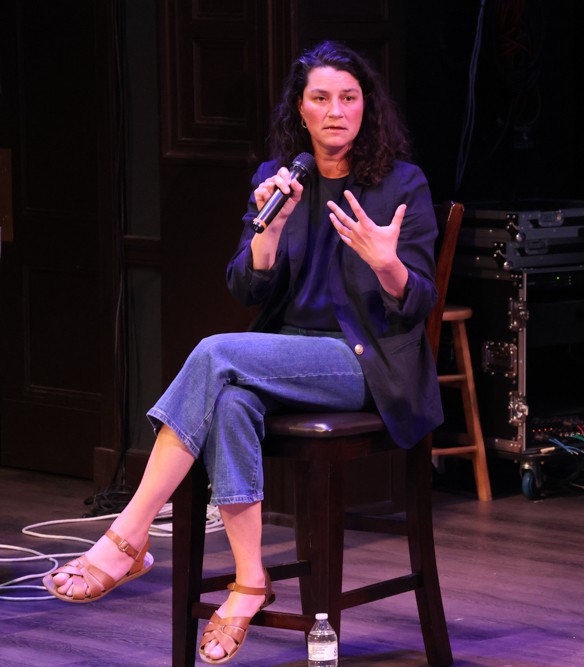

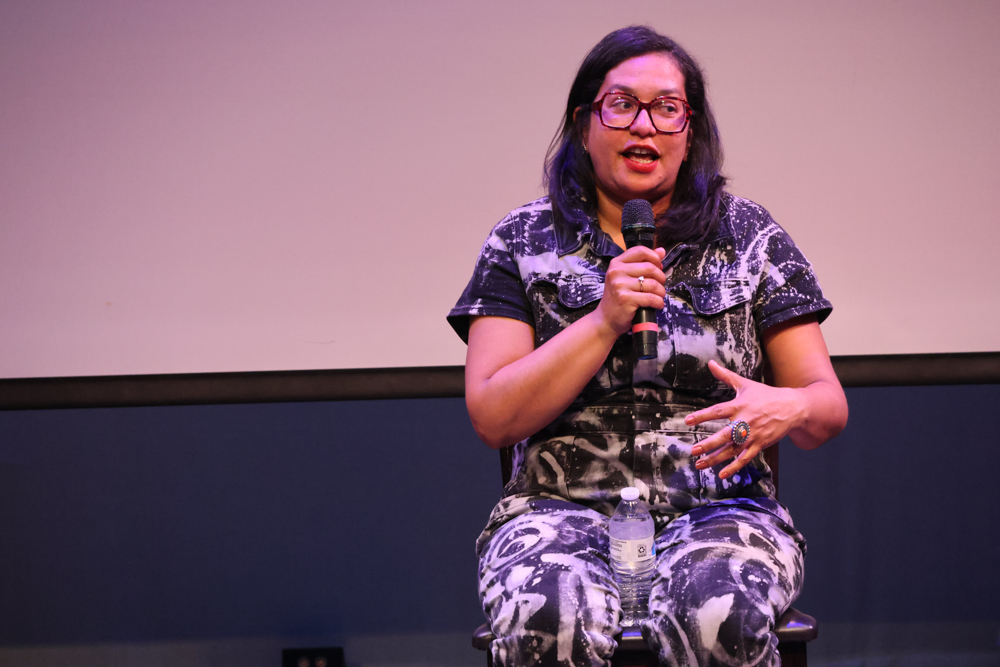
Moderator for the forum at Youngstown Cultural Arts Center was 34th DDs chair Jordan Crawley.
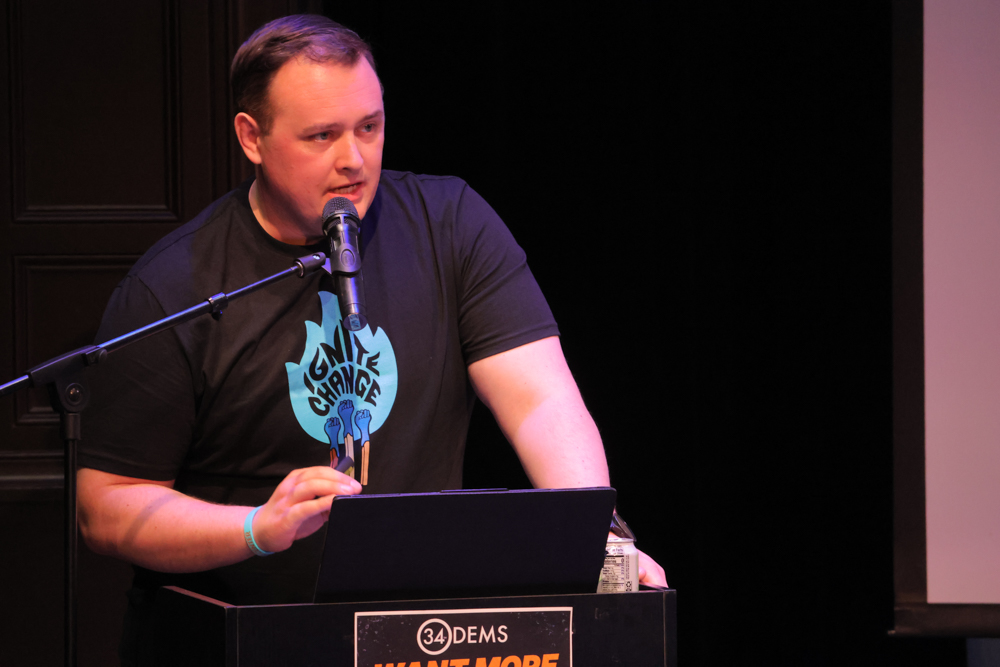
First segment featured Crawley asking questions submitted in advance; then came an open-mic Q&A period. Crawley first explained how the Legislature works, and that was addressed during some of the Q&A too – the fact that our state has a part-time Legislature, only in session a relatively short part of each year. And that doesn’t give them a ton of time to review and vote on proposals; Crawley noted that this past session featured introduction of 1,700 bills, and passage of 270.
Asked about the most-significant public-safety issues of the session, Sen. Alvarado mentioned immigration-related issues and others that left the state dealing with the federal government’s “cruelty and chaos.” Rep. Thomas mentioned her much-discussed employee-microchipping ban, observing that other states are tackling the issue too, saying ours is the 13th state to address it: “I’m very pro-bodily autonomy and anti-surveillance.” Rep. Fitzgibbon said legislation that “didn’t get done but should have” had to do with reforming juvenile sentencing laws to give offenders a better chance at rehabilitation.
The legislators also discussed what the state is doing to counter federal attacks on civil rights, reproductive rights, voting rights, and more. And they were frank about the contention that state government needs more revenue to deal with programs the current federal administration has punted back to the states. Rep. Thomas, having described herself earlier as unapologetically blunt, said her retort to critics is, “Yes, I’m a ‘tax-and-spend liberal’. What do you think government DOES?”
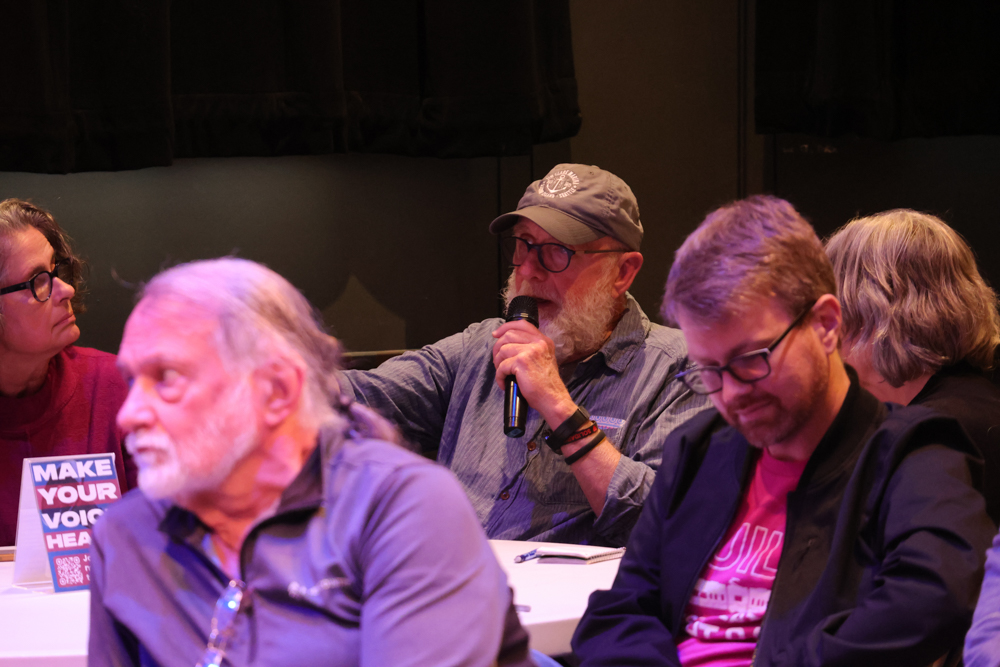
Other hot issues that were the subject of Q&A included housing, climate change, universal health care, universal child care (Rep. Fitzgibbon said he’s currently a stay-home dad because outside child care is unaffordable for his family), gun violence, alternative energy, and education. Listen to it all here:
Next event for the 34th District Democrats is their monthly meeting, also at Youngstown Cultural Arts Center, 7 pm Wednesday, after a 6 pm pre-program about ranked-choice voting
It’s often pointed out in comment discussions that many policies attributed to local leadership are actually state policies, and your state legislators are the ones with the power to change them.
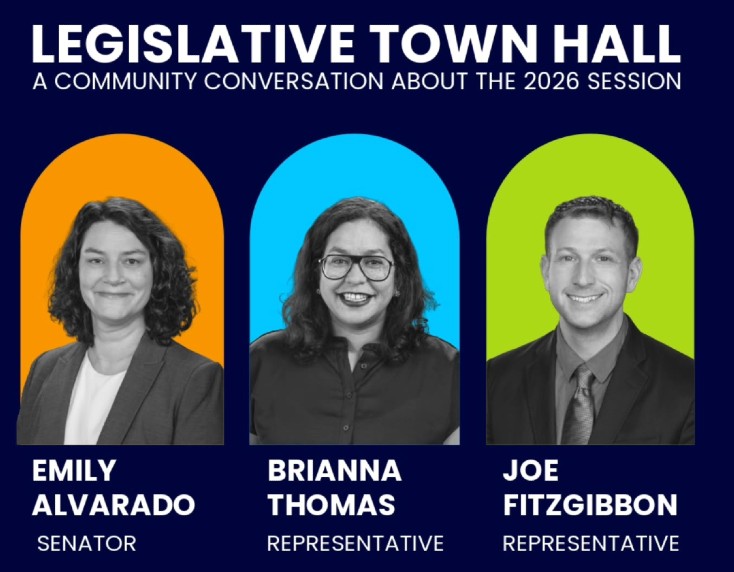 (From 34th District Democrats’. promotional graphic)
This Friday (May 8). the three legislators who represent the 34th District – including West Seattle, White Center, amd Vashon/Maury Islands – will face constituents at an in-person Town Hall. The 34th District Democrats are presenting the event featuring Sen. Emily Alvarado and Reps. Joe Fitzgibbon and Brianna Thomas at Youngstown Cultural Arts Center (4408 Delridge Way SW), 5:30-7 pm Friday. The announcement says the event “will include 30 minutes of opening dialogue and prepared questions and 60 minutes of questions from our live audience.” You don’t have to RSVP but they’re hoping people will so they “have a general idea of how many people to expect.”
| 18 COMMENTS